What Is Financial Therapy? The Missing Piece in your Financial Plan
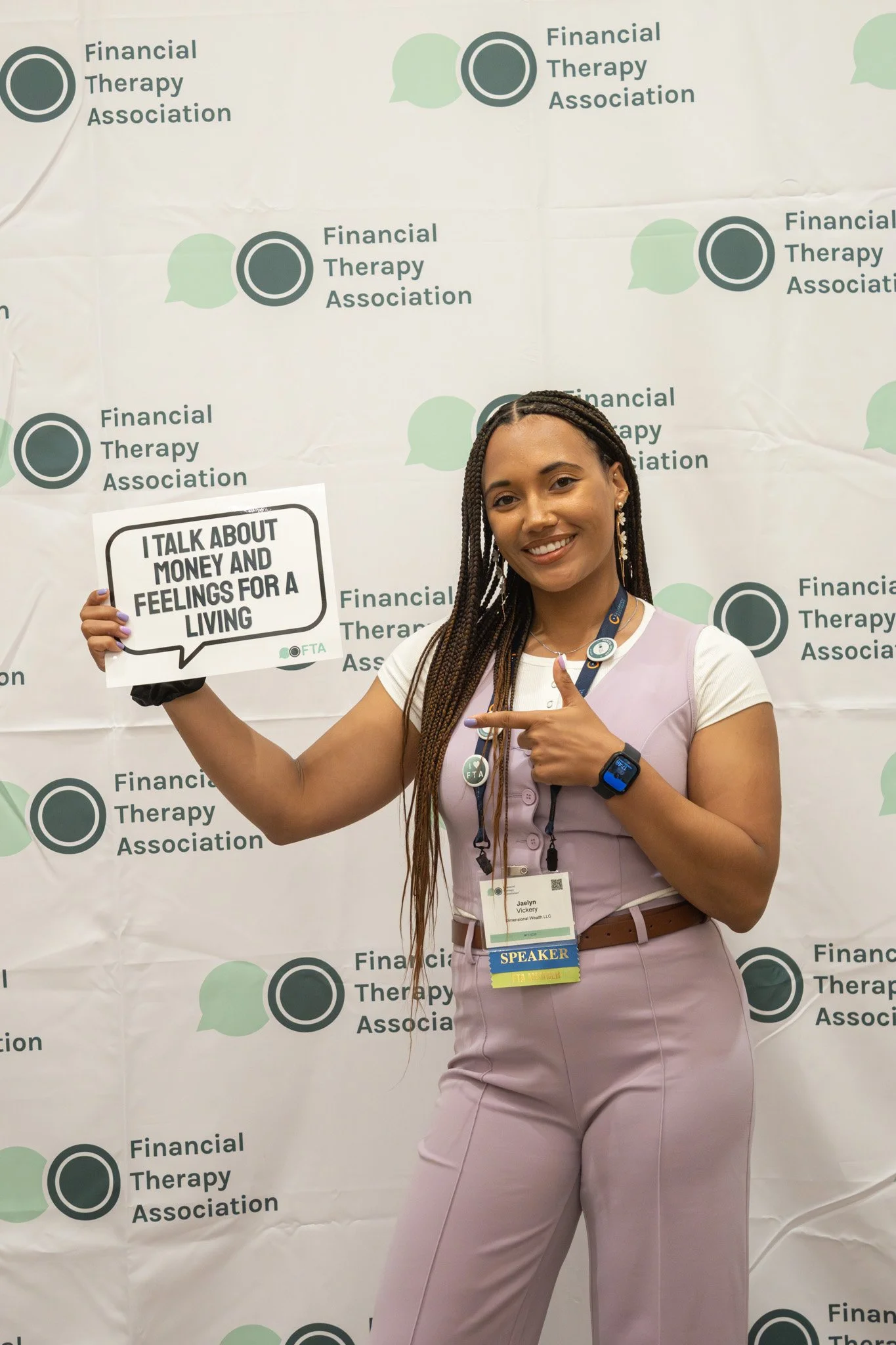
Certified Financial Therapist Jaelyn Vickery highlighting the intersection of mental health and wealth management at the Financial Therapy Association Conference.
What if improving your finances had less to do with finding the "perfect budget" and more to do with understanding why you spend, save, avoid, or stress about money in the first place?
That is where financial therapy comes in.
Financial therapy is an emerging field that combines financial knowledge with mental health principles to help people better understand the emotional, behavioral, and relational side of money. Rather than asking, "What's wrong with your budget?" financial therapy asks, "What's happened in your relationship with money that's influencing your financial decisions today?"
At Dimensional Wealth, we believe lasting financial change happens when you address both the practical side of money and the human side of money.
What Is Financial Therapy?
Financial therapy focuses on the emotional, relational, and behavioral aspects of money. It helps people identify patterns such as:
Impulsive spending
Money avoidance
Financial anxiety
Shame around debt
Fear of investing
Financial conflict in relationships
Feeling stuck despite knowing what to do
Money is rarely just about math. It is about experiences, beliefs, emotions, relationships, and the stories we carry with us throughout our lives.
The way we feel about money is often a greater indicator of long term financial health than the amount sitting in our bank account.
While financial literacy teaches you what to do with money, financial therapy helps you understand why it can be difficult to actually do it.
Beyond Budgeting: A Whole Holistic Approach to Financial Wellness
At Dimensional Wealth, we believe financial wellness should be both practical and personal.
Our services combine financial therapy with education based financial coaching to help people build confidence, clarity, and sustainable financial habits. We provide:
Financial therapy
Financial coaching
Credit coaching
Budgeting education
Debt reduction strategies
Personalized money systems and routines
Financial literacy and wellness education
These services work together to help individuals build confidence, not just competence, with money.
Because knowing how to create a budget does not always mean you will follow one. Understanding the emotional barriers behind your financial habits is often what creates lasting change.

Attendees exploring behavioral finance and financial therapy techniques during a workshop session led by Jaelyn Vickery at the Financial Therapy Association conference.
Financial Therapy Is for Everyone
One of the biggest misconceptions about financial therapy is that it is only for people experiencing financial hardship or only for people with significant wealth. The reality is that at Dimensional Wealth, we work with clients across the entire socioeconomic spectrum, from individuals living below the poverty line to high income earners and millionaires.
While every financial story is different, one common thread connects them all. Your relationship with money and your financial habits have a profound impact on your overall well being, your ability to create stability, and your ability to build wealth over time.
We have worked with clients earning six figure incomes who struggle with financial anxiety, money avoidance, and impulsive spending. We have also worked with individuals facing significant financial hardship who demonstrate remarkable resilience, intentionality, and healthy financial habits despite limited resources.
Financial wellness is not determined solely by what is in your bank account. It is built through the habits you practice, the systems you create, the beliefs you hold about money, and the behaviors you repeat every day.
That is why financial therapy looks beyond income and net worth. It helps uncover the patterns influencing financial decision making so you can build greater confidence, stability, and long term financial wellness regardless of where you are starting.
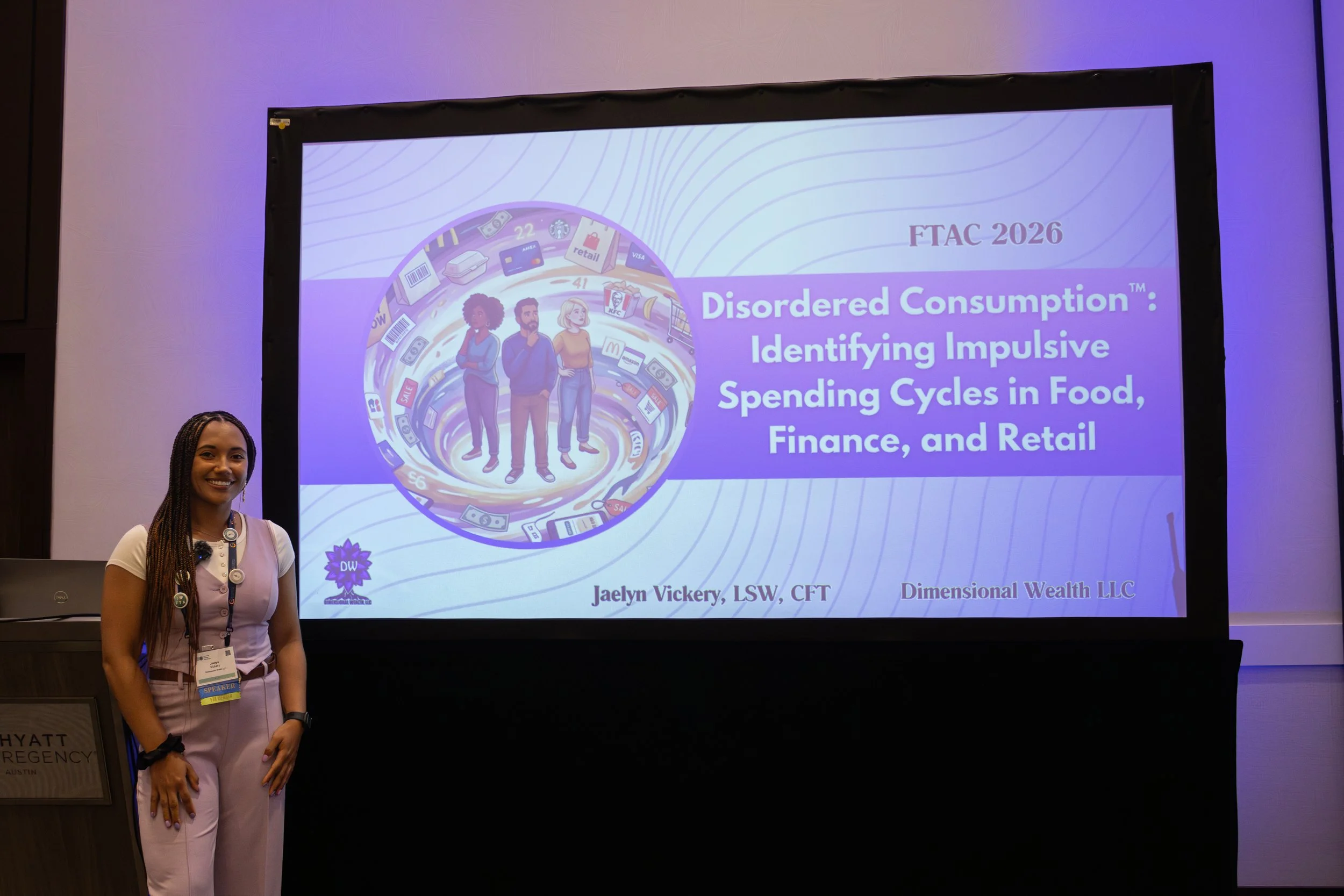
Jaelyn Vickery presenting her Disordered Consumption™ framework on financial therapy and impulsive spending cycles at the Financial Therapy Association Conference.
Bringing Financial Therapy to the National Stage
This year, I had the privilege of presenting at the 2026 Financial Therapy Association Annual Conference in Austin, Texas, where financial professionals, mental health clinicians, researchers, educators, and coaches from across the country gathered to advance the future of financial therapy.
The Financial Therapy Association brings together experts from both the financial and mental health professions because understanding the human side of money is just as important as understanding money management itself. When these disciplines work together, we are better equipped to help people create meaningful and lasting financial change.
I had the opportunity to present my workshop, Disordered Consumption™: Identifying Impulsive Spending Cycles in Food, Finance, and Retail.
The presentation explored how unmet emotional needs often drive spending behaviors across multiple areas of life, including food, finance, and retail. Through my trademarked C3 Cycle™, which stands for Compulsion, Consumption, and Control, attendees learned how repetitive spending behaviors often reflect deeper emotional, relational, and environmental influences rather than a simple lack of willpower.
Instead of asking why someone keeps making poor financial decisions, the framework encourages us to ask a different question: What emotional need is this behavior trying to meet?
When we replace judgment with curiosity, we create opportunities for meaningful and sustainable financial change. Throughout the conference, one theme continued to stand out. Collaboration Is Currency™. Financial wellness grows stronger when financial professionals, mental health clinicians, researchers, educators, and coaches work together to better understand and serve the people beyond the numbers.

Jaelyn Vickery recording the Financial Fitness Finesse segment at the WCIA 3 studio to share financial therapy tips and emotional spending coping strategies.
Learn More on the Finance, Fitness & Finesse Podcast
In a recent episode of the Finance, Fitness & Finesse (F3) Podcast, JaeVic discusses what financial therapy is, why it matters, and how understanding your relationship with money can transform the way you build wealth with wellness.
The episode also shares insights from this year's Financial Therapy Association Conference and explores why conversations around emotional spending, financial stress, and money behaviors deserve a place alongside traditional financial education.
Finance, Fitness & Finesse is available on Apple Podcasts, Spotify, YouTube, and streams on WCIA 3+, making financial education and meaningful conversations more accessible than ever.
Whether you are new to financial therapy or simply curious about why money feels so overwhelming at times, this episode is a great place to start.
You Do Not Have to Figure It Out Alone
There is no shortage of financial advice online. In fact, all of the information can become so overwhelming that many people simply tune it out altogether.
Financial therapy is designed to make money more approachable, more accessible, and easier to understand. It equips people with practical skills, personalized strategies, and sustainable systems while also addressing the emotions and behaviors that often stand in the way of financial progress.
Whether you are struggling with money avoidance, recovering from a financial setback, feeling anxious about your finances, caught in patterns of impulsive spending, or simply trying to learn where to begin, you do not have to navigate it alone.
If you are ready to take the next step, schedule a consultation with Dimensional Wealth. We will help you identify the services that best fit your goals, whether that is financial therapy, financial coaching, credit coaching, or financial wellness education. Together, we can build the skills, strategies, and systems that help your money work for you, not against you.