The Only Way to Learn About Money Is to Talk About Money
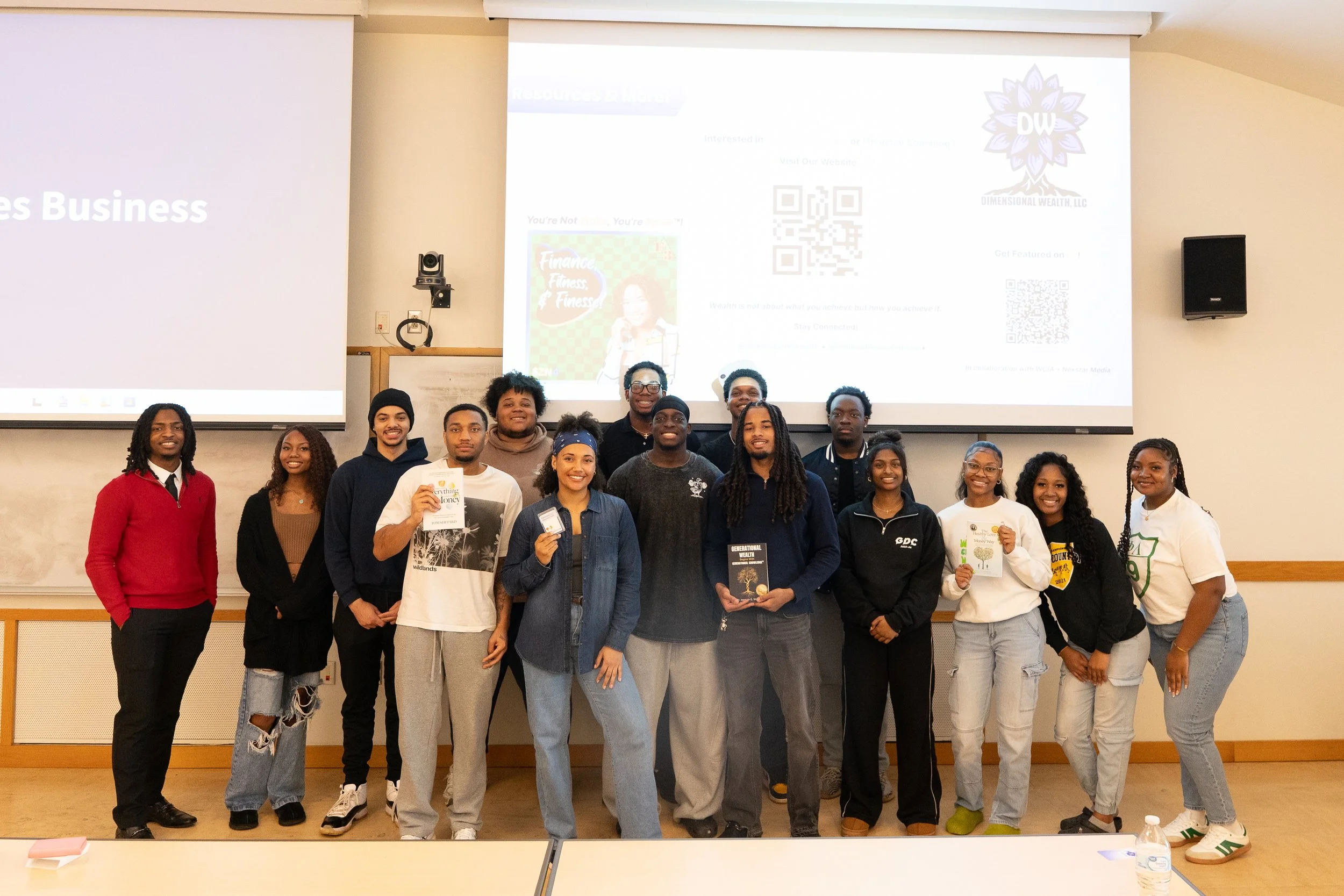
Financial Literacy and Empowerment Event at the University of Illinois
I recently had the opportunity to speak at the University of Illinois through a partner with RSO, Fuel (Future United Executives and Leaders) and the sorority Iota Delta Psi for a conversation that went far beyond budgeting or saving. We didn’t just “talk” about money. We debated about everything that influences it, especially our psychology, relationships, and emotions.
We dove into what building wealth looks like for different generations, especially young people stepping into a world of uncertainty right after college. The pressures of modern life can feel overwhelming, almost like another kind of consumption. You’re consuming advice, consuming expectations, consuming opportunities… and sometimes, that shapes your financial behaviors in ways you don’t even realize.
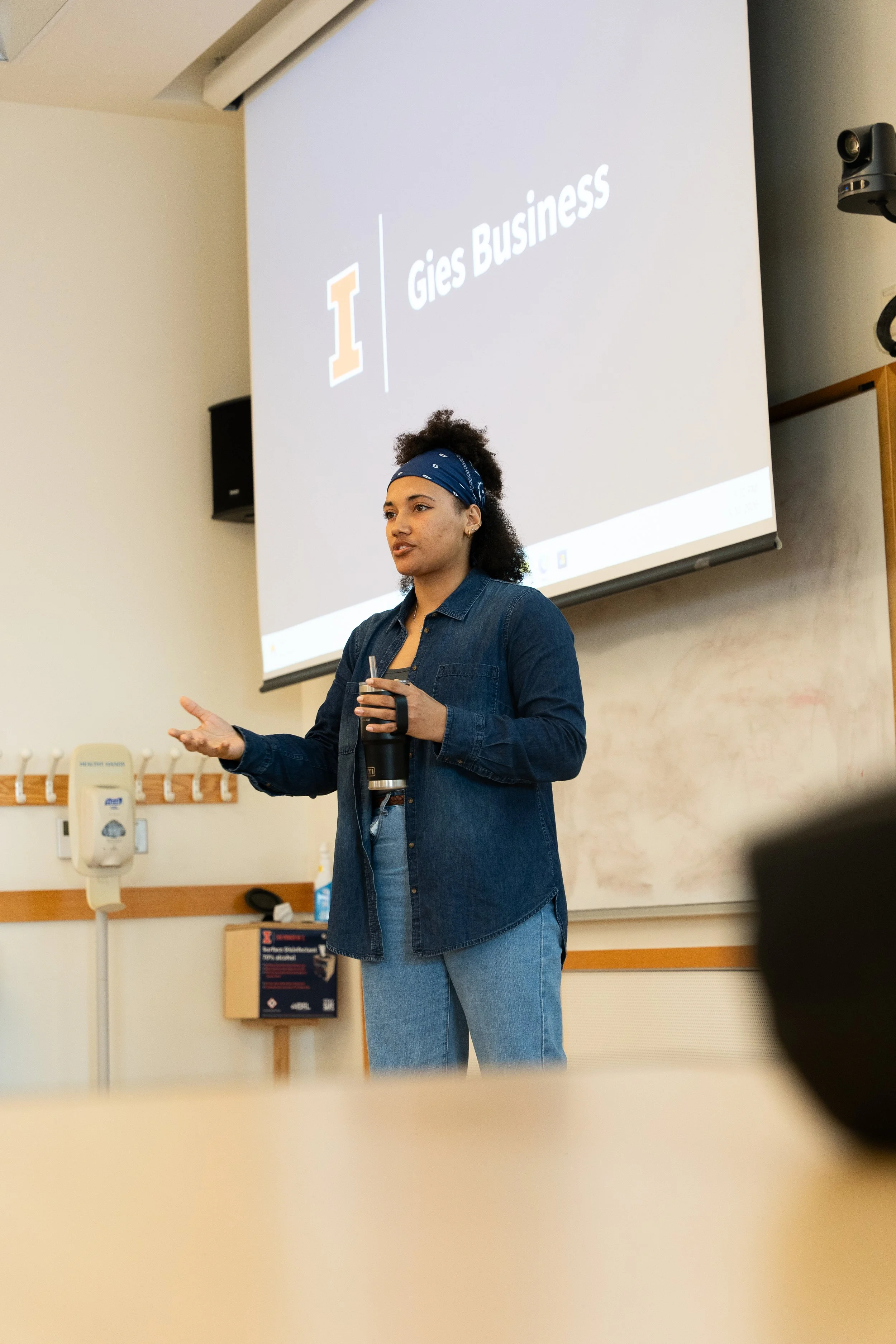
Jaelyn Vickery, CFT Speaking at GIES Business
A recent Forbes article highlighted a study on financial literacy that really drives the point home. Researchers Hipolito Davila and Jitka Hilliard from Auburn University surveyed 31,000 college students and found that fewer than 50% answered at least two-thirds of financial literacy questions correctly. Those with student debt, arguably the group who most needs financial understanding, performed even worse. Even business students, who might be expected to have an advantage, only got about half of the questions right.
In short: many young people are stepping into adulthood without the foundational financial knowledge they need, and the system isn’t equipping them to navigate it.
That’s why conversations like the one I had with FUEL and Iota Delta Psi are so essential. We talked about generational wealth and generational knowledge, inspired by Dr. Joaquin Wallace’s work. Not only what knowledge, but how knowledge about money is passed down has a critical impact on the financial fundamentals young people use effectively for both short and long-term stability.
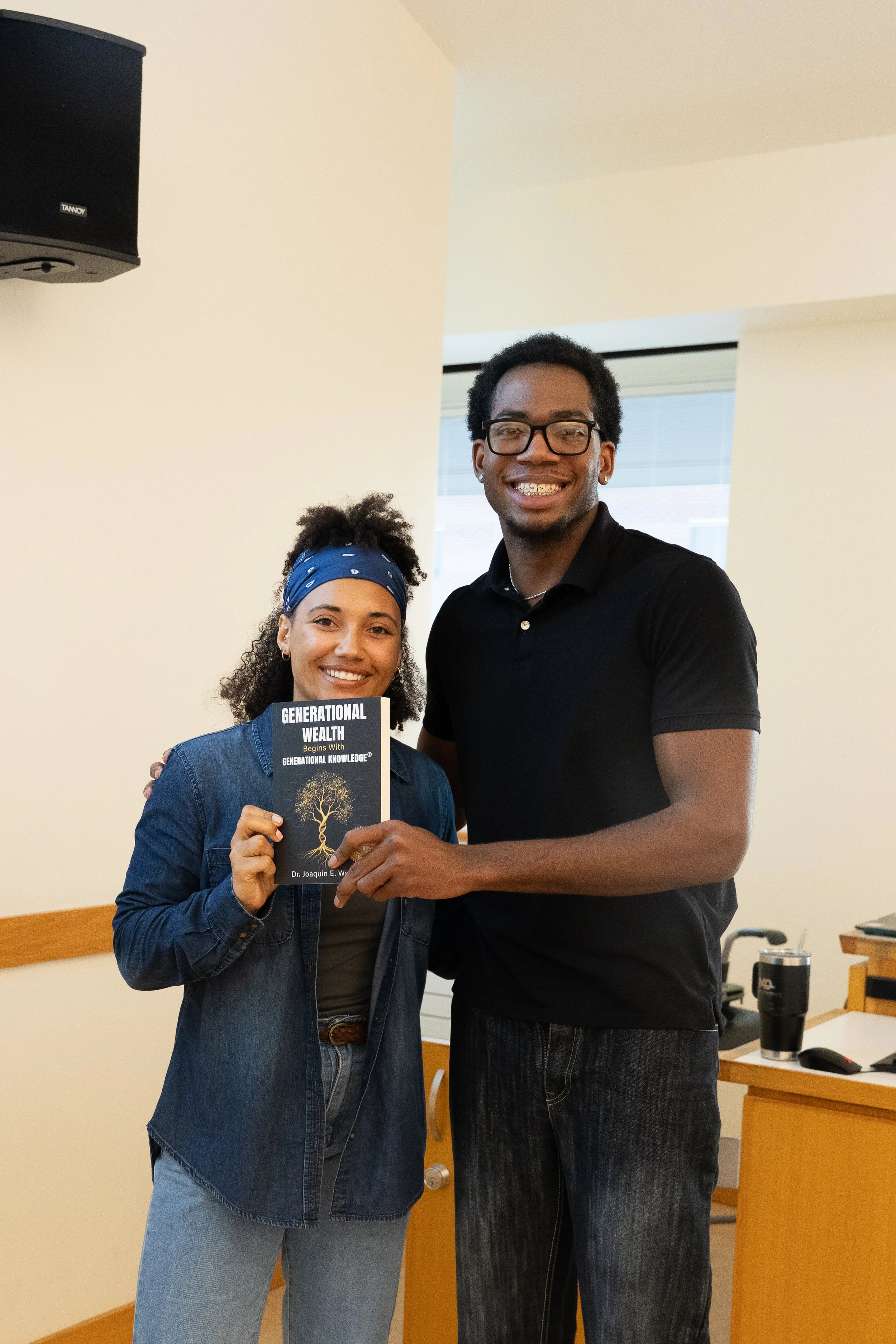
We ended our discussion on the concept of financial edification, which Dr. Wallace highlights in his book. Financial edification is about building financial knowledge in a way that strengthens your mind, habits, and sense of security. It’s about learning money in a way that feels empowering, not stressful, and understanding that every step you take toward financial literacy is a step toward freedom.
I walked away feeling grateful. Our culture often teaches us to pursue wealth as a destination, a number to chase. But what if we pursued wealth differently through wellness, awareness, and intentional learning? That’s the kind of wealth that lasts, the kind that feels good, and the kind that truly supports you and your community.
At the end of the day, the only way to learn about money is to talk about money. The more we discuss it openly, the better equipped we are to make decisions that align with our goals, our values, and the life we want to create. And honestly, our culture could use a lot more of that.