Financial Literacy and Financial Wellness: Why Workforce Development Programs Need Both
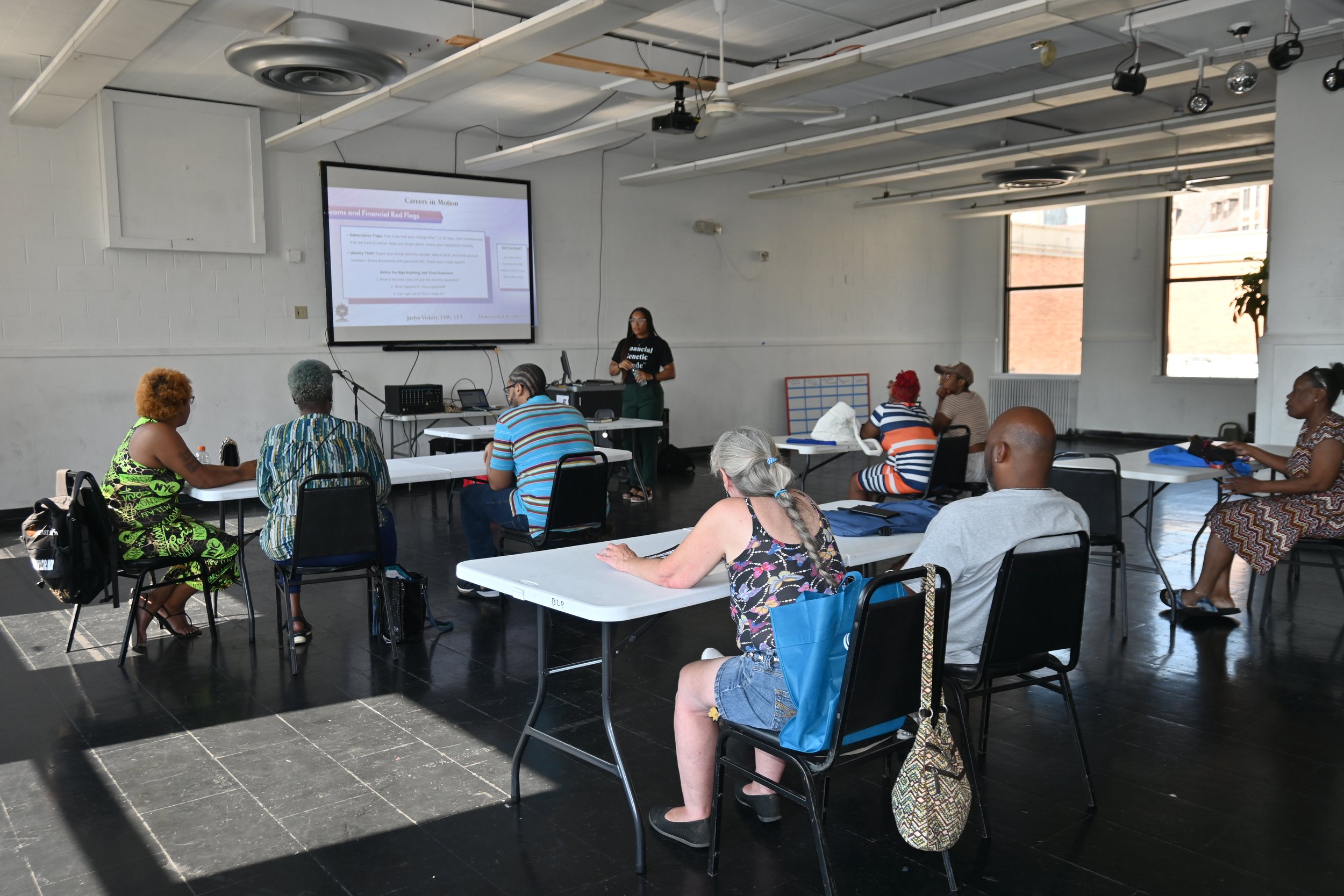
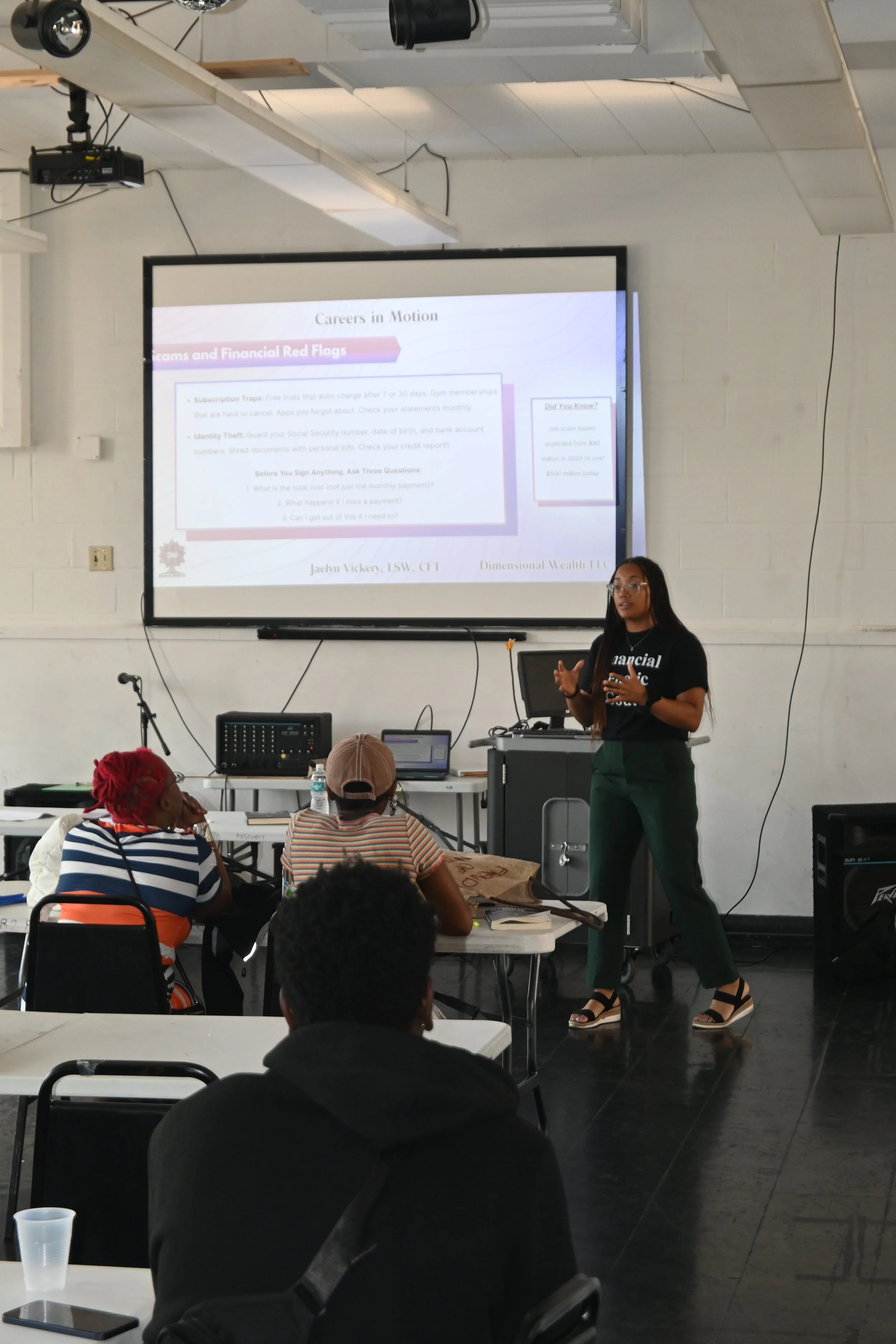
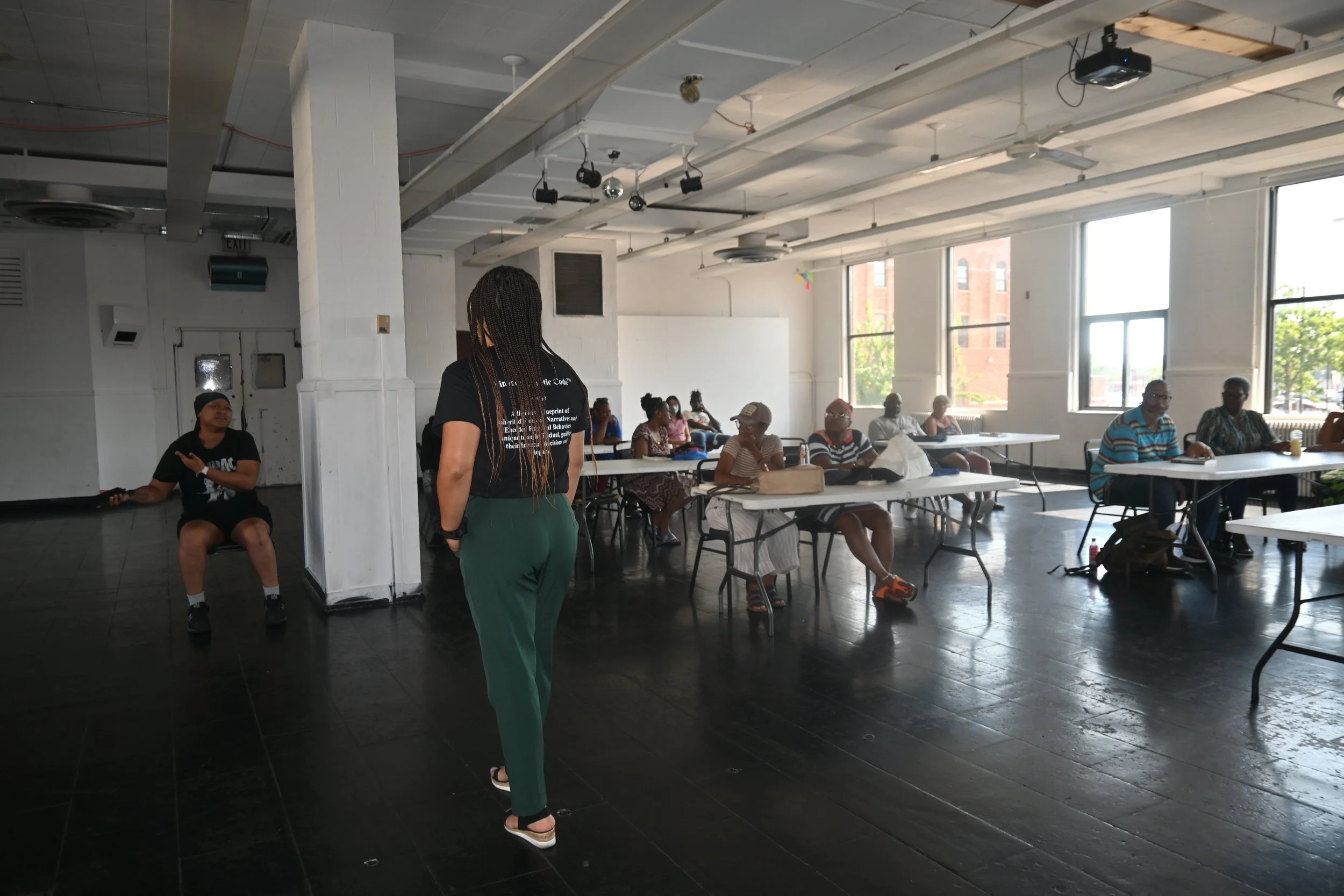
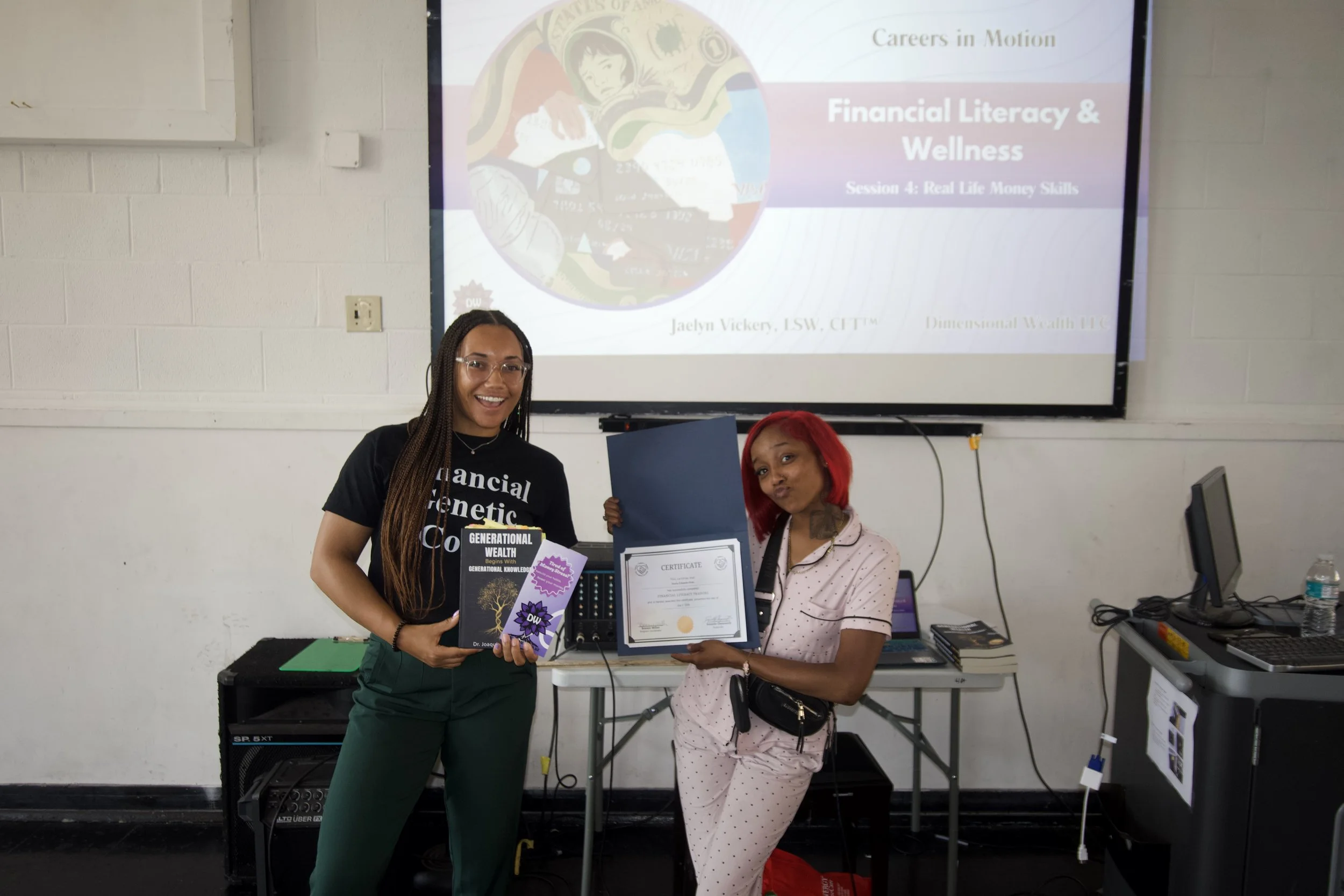
Real conversation, real solutions. Community members gathering for real-life money skills training with Jaelyn Vickery at the Dimensional Wealth Financial Literacy & Wellness Summer Program in partnership with Cunningham Township's Careers in Motion.
When organizations talk about preparing people for employment, the conversation often focuses on resumes, interviewing, professional skills, and career readiness.
But workforce readiness does not exist in isolation.
A person’s ability to build long-term stability is connected not only to employment opportunities, but also to how they understand money, make financial decisions, respond to financial stress, and navigate the experiences that have shaped their relationship with money.
That is why financial literacy and financial wellness belong in the workforce development conversation.
This summer, Dimensional Wealth LLC, led by Jaelyn Vickery, CFT™, partnered with Cunningham Township’s Careers in Motion workforce development program to facilitate a four-week financial literacy and financial wellness series designed to support participants in developing practical money skills, financial awareness, and greater confidence in their financial decision-making.
What stood out most was not just the financial knowledge participants gained. It was the range of money stories present in the room. Some participants entered eager to learn, asking questions and wanting to build a stronger financial foundation. Others entered feeling frustrated, overwhelmed, or even angry about how the “game of money” had not worked in their favor up to that point. And there was space for all of those perspectives.
Money is often emotions disguised as numbers.
Our financial decisions are influenced by our experiences, beliefs, relationships, stress responses, and the messages we have received about what money means. That is why Dimensional Wealth approaches financial education differently. We combine financial literacy, financial wellness, and financial psychology to help individuals understand not only what to do with money, but also what influences the way they engage with money.
Financial Literacy Provides Knowledge. Financial Wellness Supports Application.
Traditional financial literacy often focuses on practical knowledge:
How do you create a budget?
What impacts your credit score?
How do you build savings?
What is the difference between a need and a want?
These concepts matter, but knowing what to do with money does not always translate into feeling capable of doing it. Someone can understand that saving is important but feel overwhelmed by their current financial reality. Someone can know how credit works but carry shame from past financial decisions. Someone can create a budget but struggle to follow it because spending, saving, and money management are connected to emotions, habits, stress, or past experiences.
Financial literacy provides the information. Financial wellness helps people understand how that information fits into their real lives. By combining financial education with wellness, participants have an opportunity to move from simply knowing financial concepts to applying them in ways that align with their goals and circumstances.
The Role of Financial Psychology in Money Decisions
Financial psychology recognizes that money behaviors are rarely just about money. The way someone earns, spends, saves, or avoids financial tasks can be connected to their personal history and the meaning they attach to money. Money can represent safety, freedom, fear, success, control, independence, or survival and so much more. Through a financial psychology lens, financial challenges are not viewed only as a lack of knowledge. They are explored with curiosity and awareness.
What experiences shaped this belief about money?
What messages were learned about spending, saving, or wealth?
What patterns continue to show up today?
This is where Dimensional Wealth incoporates financial therapy and behavioral awareness to add the depth to financial education that many financial literacy programs are missing.
Meeting People Where They Are Financially
One of the most important parts of effective financial education is recognizing that people enter the room with different experiences, resources, and levels of financial knowledge. Some participants may already understand budgeting. Others may be learning foundational financial concepts for the first time.
Some may have established credit. Others may be rebuilding after financial hardship. A meaningful financial literacy program has to make room for those differences.
Through the Careers in Motion program, participants explored foundational financial topics including income and expenses, budgeting, needs versus wants, banking, saving, credit, debt, consumer awareness, financial goal setting, and practical financial decision-making. We created space for reflection, questions, and conversations about how money impacts everyday life. Our curriculum is designed to be interactive, practical, trauma-informed, and non-judgmental because financial education works best when people feel safe enough to engage.
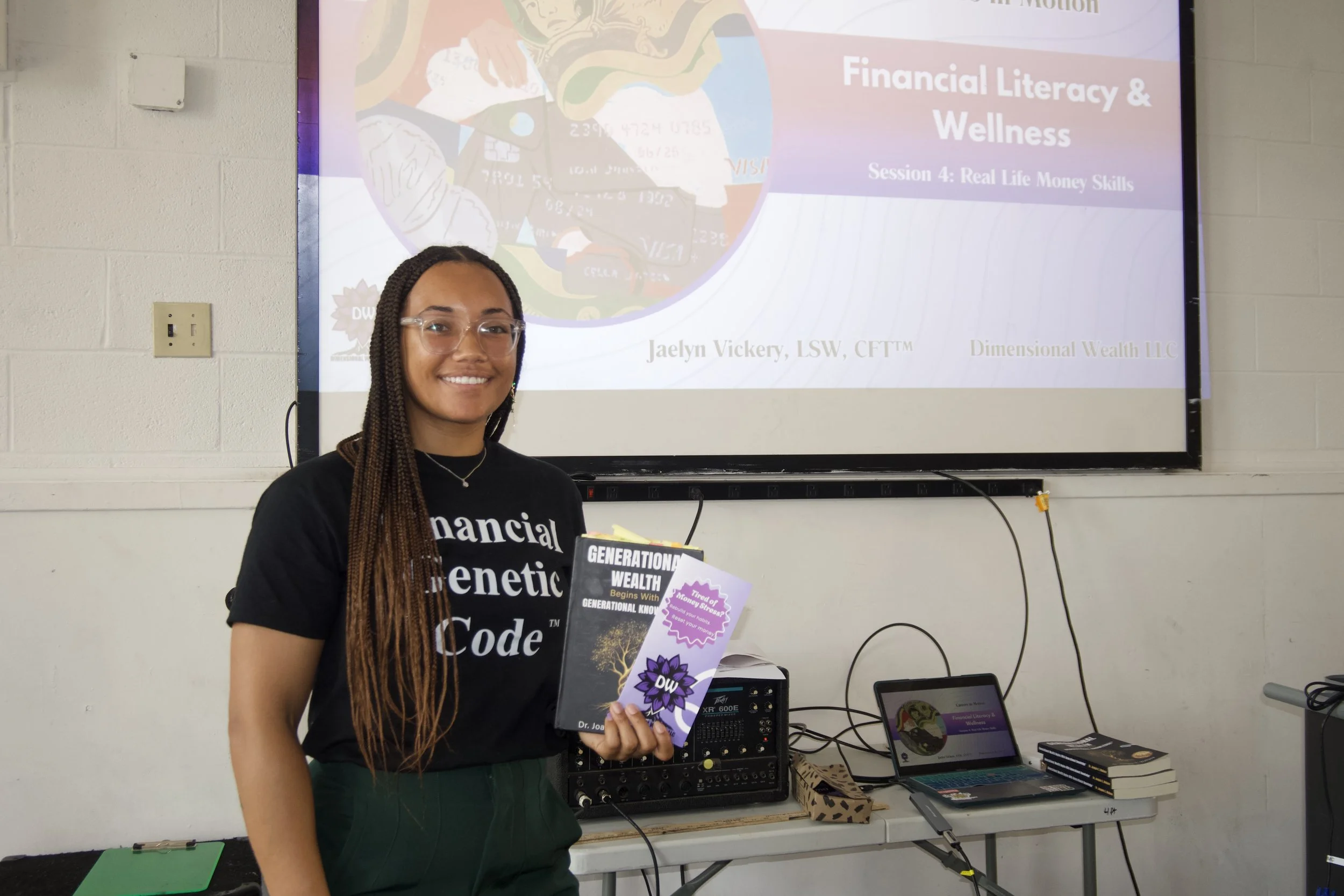
Equipping participants with tools for long-term success! Jaelyn Vickery, LSW, CFT holding a copy of Generational Wealth Begins With Generational Knowledge during Session 4: Real Life Money Skills.
Generational Knowledge Shapes Financial Futures
Another important part of financial wellness is understanding that our relationship with money is shaped by more than individual choices. Financial beliefs and decision-making patterns are often influenced by the experiences we encounter throughout our lives and across generations.
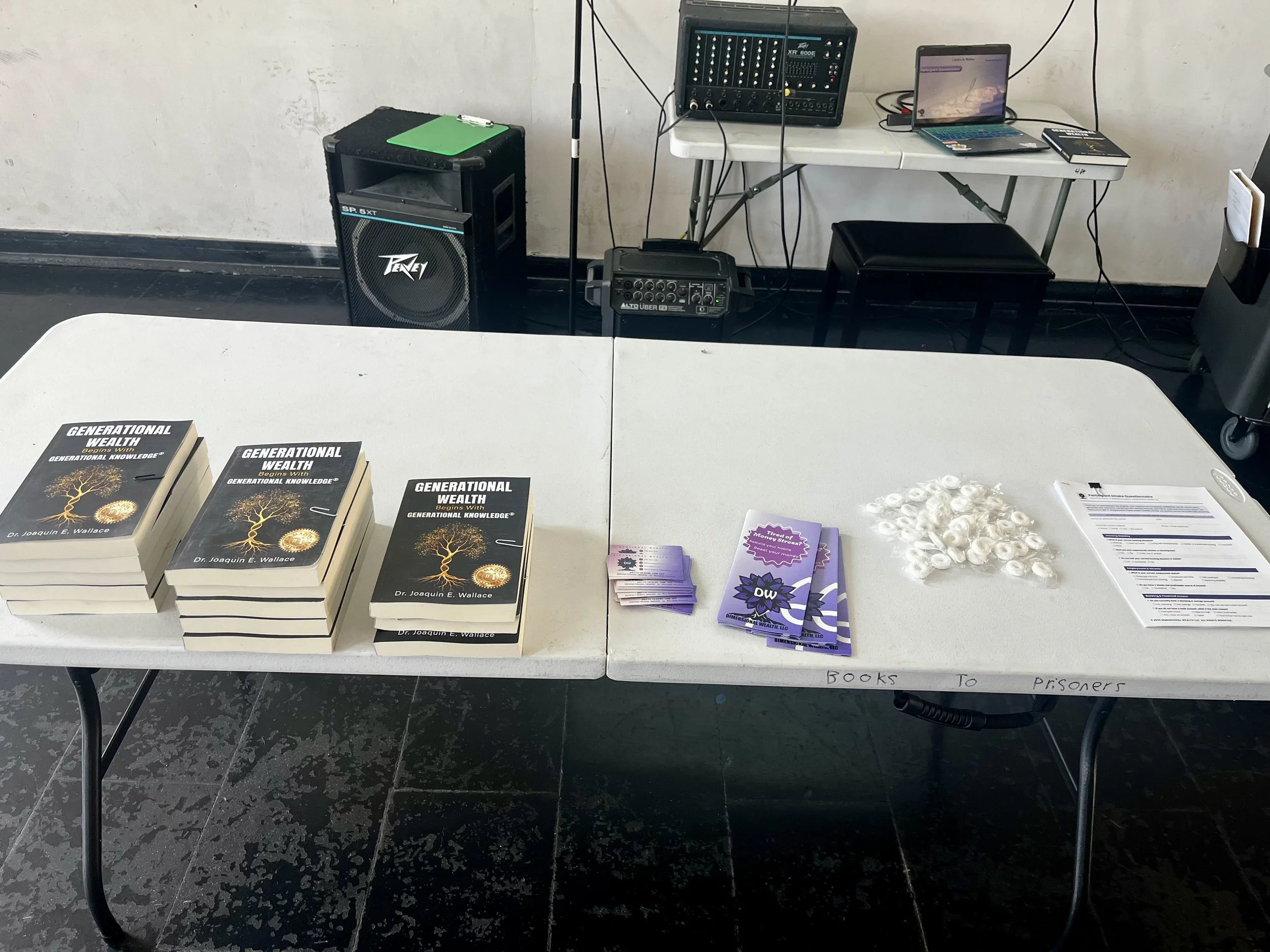
As part of the curriculum, we incorporated concepts from Dr. Joaquin Wallace’s work, including Generational Wealth Begins with Generational Knowledge and the Financial Genetic Code® framework, to help participants explore how financial experiences and inherited messages can influence the way they understand and engage with money.
When conversations about generational wealth take place, they often focus on tangible assets such as homeownership, investments, businesses, savings, and inheritance. While those resources are important, financial knowledge is also something that can be transferred from one generation to another. So are the beliefs, habits, and narratives that influence financial decision-making.
By creating space to reflect on these influences, participants were able to consider how their financial stories developed, recognize patterns that may impact their current choices, and identify opportunities to create more intentional financial behaviors moving forward. Awareness does not change the past, but it can create options for the future.
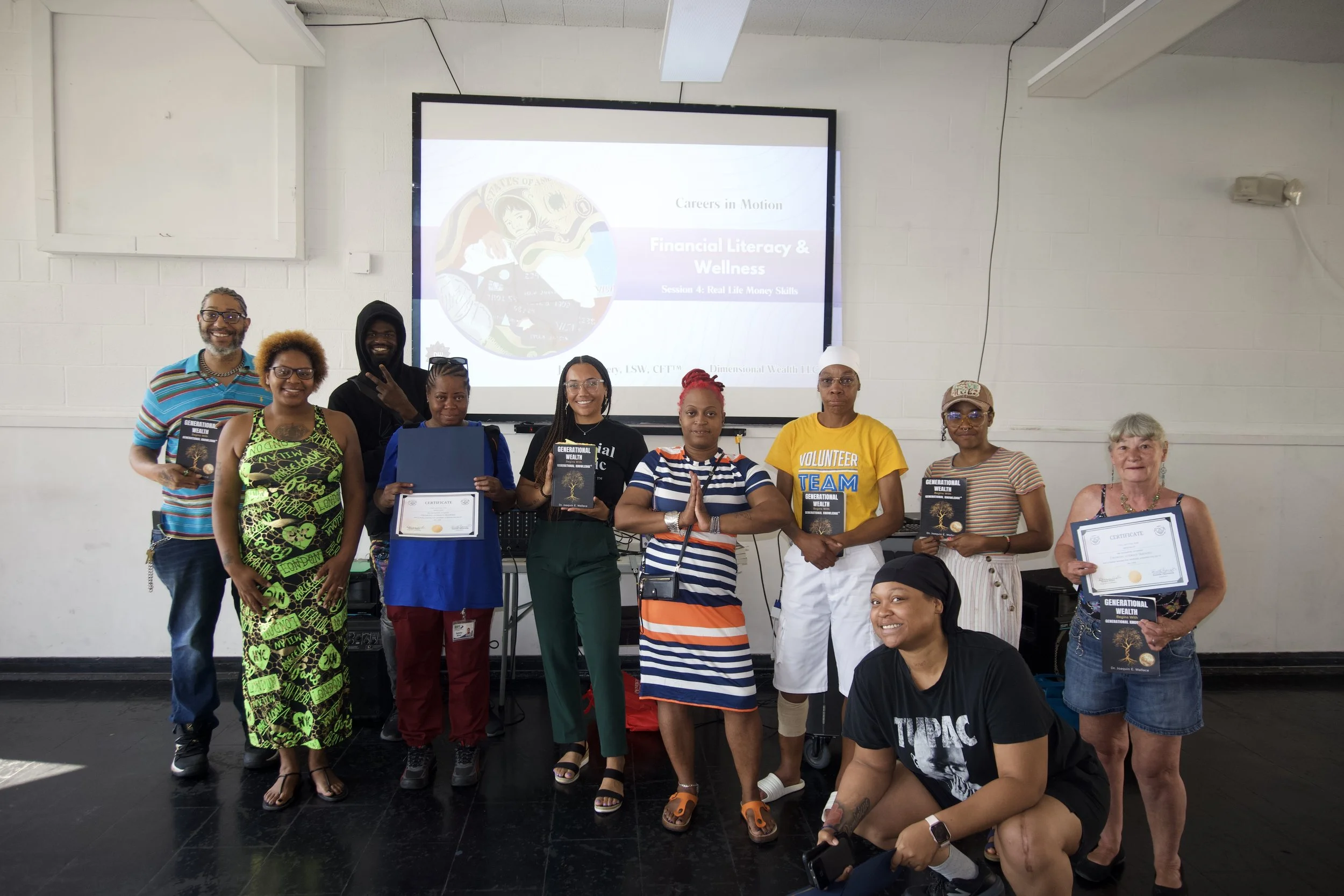
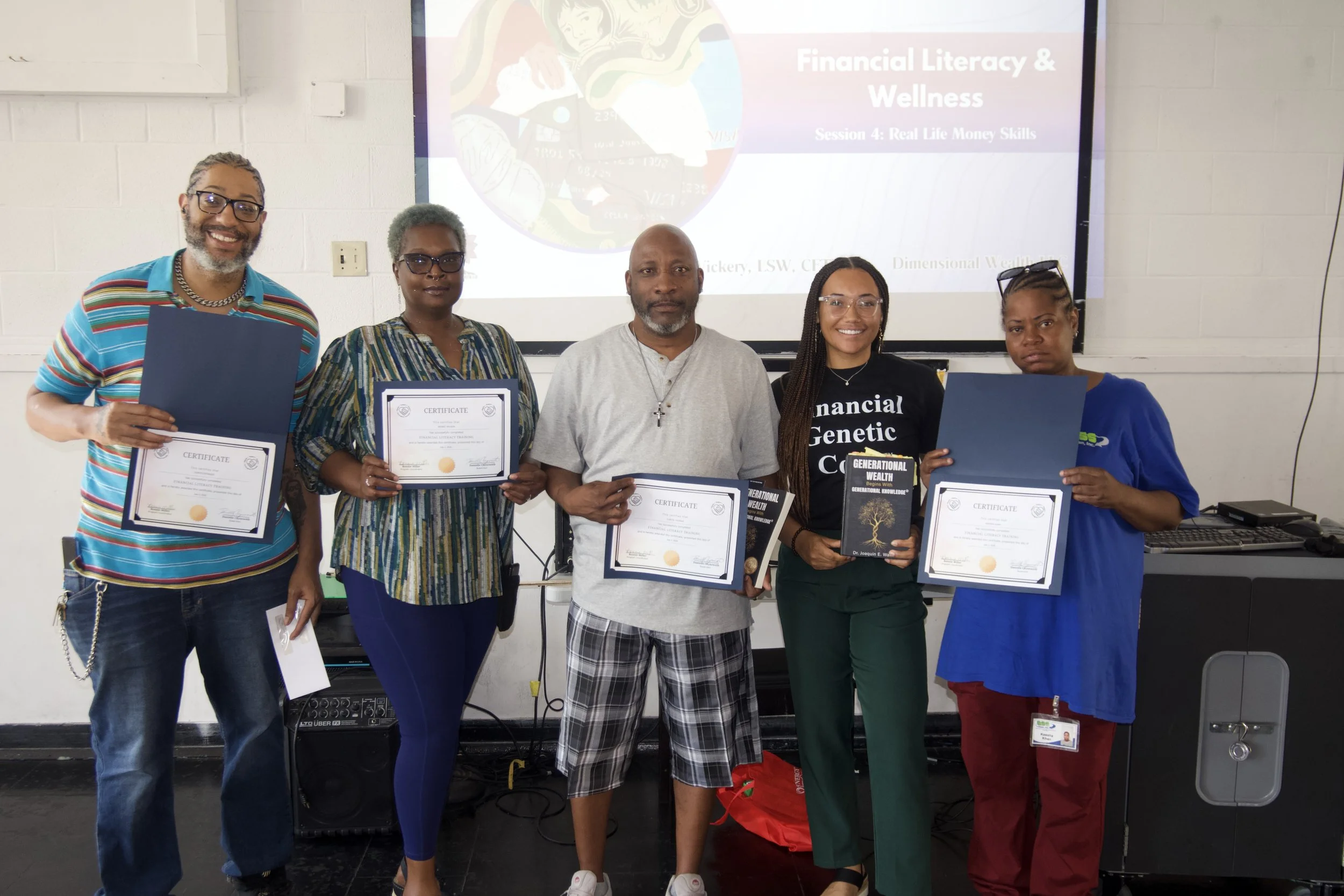
Celebrating growth and accomplishment! Participants alongside Jaelyn Vickery at the Dimensional Wealth Financial Literacy and Wellness Summer Program, hosted in partnership with Cunningham Township’s Careers in Motion.
Bringing Financial Wellness Programming to Organizations
Workforce development programs play an important role in helping individuals build skills, pursue opportunities, and create stability. Financial wellness programming through Dimensional Wealth complements that work by helping individuals understand how to manage the financial opportunities they are working toward.
This includes learning how to build savings, understand credit, manage expenses, evaluate financial choices, reduce financial stress, and create realistic goals. Financial stability is not created by income alone. It is also influenced by knowledge, behaviors, systems, and the ability to make intentional decisions with the resources available.
Financial literacy and financial wellness programming can support a variety of organizations, including:
Workforce development programs
Nonprofits and community organizations
Schools and universities
Employers and employee wellness initiatives
Social service agencies
Youth and young adult programs
Through Dimensional Wealth LLC, Jaelyn Vickery, CFT™, provides financial literacy workshops, financial wellness programming, customized financial education curricula, and speaking opportunities designed to meet organizations where they are.
Financial education is most effective when it connects practical money skills with the experiences, beliefs, and behaviors that influence financial choices. By recognizing the human side of money, we create opportunities for deeper understanding and more meaningful application.
Build wealth with wellness by bringing Dimensional Wealth programming to your organization.