Not All Money Is Good Money: The Hidden Cost of Toxic Professional Relationships

Making it to graduation was a triumph. Despite navigating a toxic professional dynamic and financial pressure during my MSW internship,
When we're young and trying to build a career, we're often told to say yes to every opportunity. Find mentors. Build your network. Work hard enough that someone notices you. Those are all pieces of advice I believed, and in many ways they helped me get where I am today.
But one of the biggest lessons I've learned is that not every opportunity is worth the price you pay for it.
This is the story behind my latest episode of Finance, Fitness & Finesse as part of my Not All Money Is Good Money series. In this episode, I share one of the most personal money stories I've ever told and explore how financial pressure, professional power dynamics, and the desire to build a successful career can impact the decisions we make.
You can watch the full episode on YouTube or listen wherever you get your podcasts.
While I was completing my Master of Social Work degree, I had a professor I genuinely admired. They were successful, respected, and only several years older than me, which made their career feel attainable. I worked hard in class, participated, and wanted to learn as much as I could. When they reached out after the semester ended and offered me a position, I felt like everything I had been working toward was finally coming together.
The job was flexible, related to the exact population I wanted to serve, and eventually became my employment-based internship. In a field where paid internships are incredibly rare, it felt like winning the lottery. I wasn't just excited about the income. I was excited that someone I respected believed in me enough to invest in my future. That made what followed even harder to recognize and even harder to walk away from.
Over time, though, I started noticing things that made me uncomfortable. There were ethical concerns that didn't sit right with me, and when I asked questions or spoke up, I quickly realized there could be consequences. The person who had once been my professor was now my employer, my mentor, and my internship supervisor. They had a controlled influence over my income, my education, my clinical experience, and ultimately my path toward graduation.
That kind of power dynamic makes it incredibly difficult to know when, or even how, to safely advocate for yourself.
As the months went on, the professional boundaries became increasingly blurred. I had accepted the position because I wanted to learn, build clinical skills, and make a difference in the community. Instead, there were days when I found myself doing things that had very little to do with the job I was hired to do.

Finding peace. No paycheck or opportunity is worth sacrificing your mental health or peace of mind. Learning to step back, reset, and heal your relationship with money starts with honoring yourself.
As the intern, I was at the bottom of the totem pole, and it became easy for professional expectations to spill into personal ones. Sometimes, instead of focusing on my work or serving clients, I was sent on personal errands, picking up items, running tasks, or helping with things that had nothing to do with my education or professional development.
At the time, I convinced myself that maybe this was just part of paying my dues. I wanted to learn. I wanted to prove myself. I wanted to make the most of an opportunity that I believed could shape my future. Looking back, I realize I was slowly losing sight of where healthy professional boundaries should have been.
By then, I felt trapped. I wasn't just worried about losing a job. I worried about delaying graduation, finding another internship, paying my bills, and taking on even more student debt. Every time I thought about walking away, fear reminded me of everything I stood to lose. The position that once felt like such a blessing had become something I felt financially dependent on.
The stress eventually followed me everywhere. It became difficult to focus on my actual work because I was constantly anticipating the next text, the next request, or wondering if I had somehow disappointed them. I would replay conversations in my head long after I got home. Even when I wasn't working, I never really felt off the clock. I had money coming in, but I had no peace. More than anything, I just wanted to get out, yet I felt completely stuck.
That is what I mean when I say money is emotions disguised as numbers.
During that season of my life, money wasn't freedom. It represented the feeling that my financial security depended on keeping parts of myself quiet, even when every instinct told me something wasn't right. Looking back, I wasn't staying because I lacked values. I was staying because financial pressure can make even unhealthy situations feel impossible to leave.
I’m proud to say that I did make it to graduation, though leaving the position didn't bring lasting freedom to start my career. Five months after graduation, that previous mentor reported me to my licensing authority. Although the investigation ultimately resulted in no disciplinary action, the fact that the online report was made meant the process still had to happen. For nearly eight months, I lived with the uncertainty of whether the career I had spent years building could be impacted by an allegation that ultimately went nowhere. The investigation itself became another source of stress to carry while I was trying to move forward professionally. Every email, every phone call, and every update brought back the fear that something I had worked so hard to build could be taken away.
During that same period, I was continuing to grow professionally. Instead of being able to fully celebrate those milestones, I was navigating the emotional weight of an unresolved process that followed me beyond the internship position I had already left. That experience changed the way I viewed success, opportunity, and the environments I was willing to be part of. I realized the greatest cost of that paycheck wasn't measured in dollars. It was measured in sleepless nights, constant anxiety, diminished confidence, and the lingering fear that the career I loved could disappear because of one unhealthy professional relationship.
Today, I still believe in the importance of mentors, supervisors, and professional relationships. They can open doors, build confidence, and completely change the trajectory of a career. I also believe those relationships should be built on respect, integrity, and healthy boundaries. No opportunity is worth sacrificing your mental well-being, your professional integrity, or your peace.
This experience is one of many reasons I founded Dimensional Wealth and pursued financial therapy. People often assume financial trauma only comes from bankruptcy, foreclosure, or overwhelming debt. In reality, financial trauma can also develop through unhealthy workplace dynamics, toxic professional relationships, manipulative power imbalances, or feeling financially trapped in situations you don't feel safe leaving.
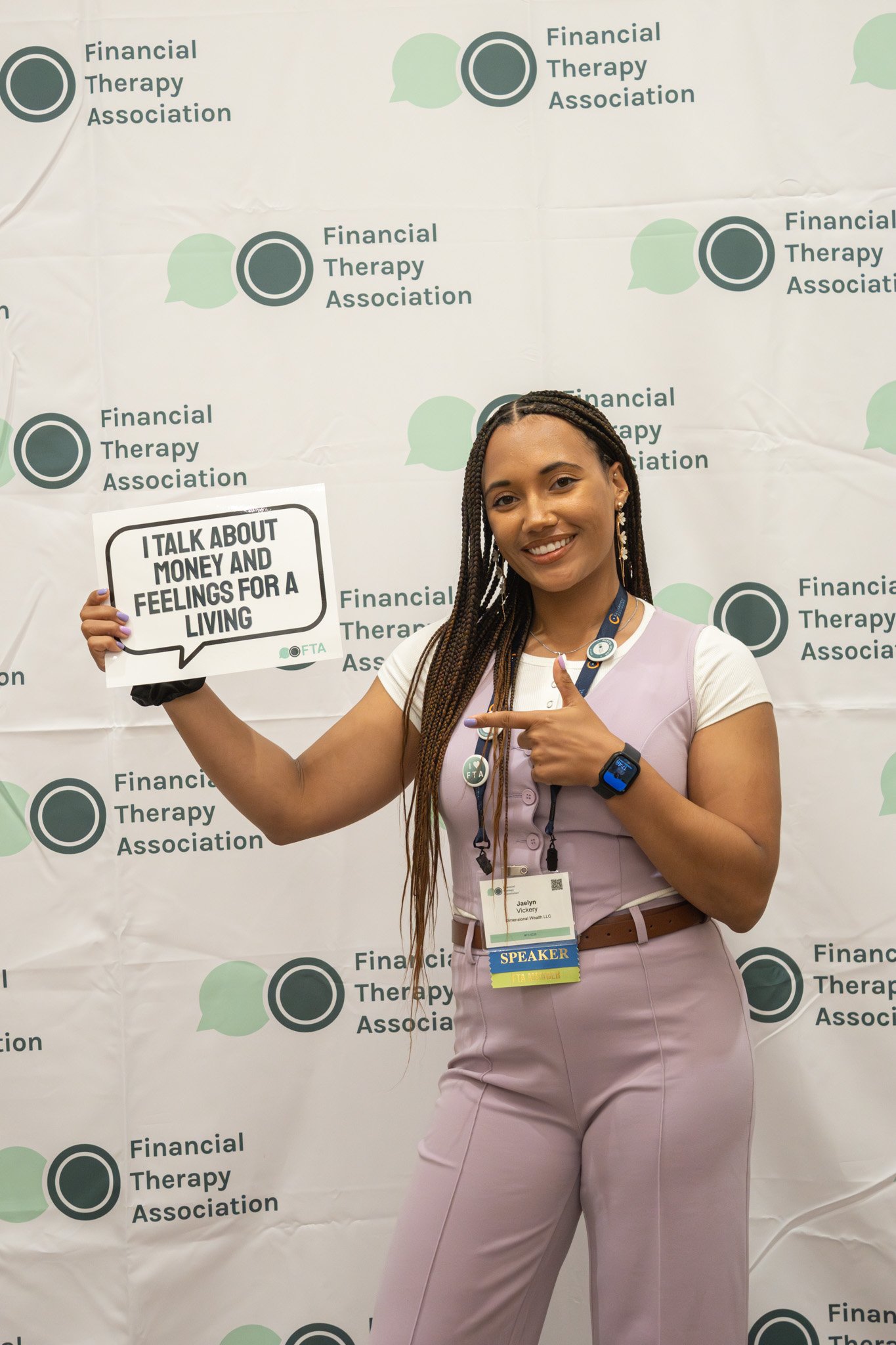
"Money is emotions disguised as numbers." Turning past workplace trauma into purpose at the Financial Therapy Association conference, where we advocate for healthy professional boundaries and emotional financial wellness.
Financial therapy helps us acknowledge and understand that not all money is good money. It helps us explore the emotions, beliefs, and experiences that shape our financial decisions so we can build confidence, establish healthier boundaries, and make choices from a place of intention rather than fear.
Healing your relationship with money also means healing your relationship with yourself.
If you’ve found yourself saying yes because you felt like you couldn’t afford to say no, constantly being the person who says yes to avoid conflict or protect an opportunity, staying in a job because leaving felt financially impossible, or carrying the emotional weight of a past financial experience, know that you are not alone.
I also believe our money stories have the power to help others heal. If this story resonated with you, I invite you to share your own money story through Finance, Fitness & Finesse. F3 community members, aka finessers, receive access to exclusive perks, resources, and merchandise designed to support you on your financial wellness journey.
If you recognize yourself in this story, here are three things you can do:
1. Name what is happening.
Start by identifying the patterns you may have normalized. Are you constantly anxious before responding to messages? Do you feel afraid to set boundaries? Are you sacrificing your values, health, or well-being to maintain an opportunity?
2. Build support before making a major decision.
Toxic professional relationships can become even harder to navigate when you feel isolated. Seek support from trusted mentors, peers, therapists, or professionals who can help you evaluate your situation and understand your options.
3. Create a financial and emotional plan.
Leaving an unhealthy situation is not always as simple as walking away. Financial responsibilities, career goals, and fear can make change feel impossible. Understanding your relationship with money can help you identify what is keeping you stuck and create a path forward that aligns with your values.
At Dimensional Wealth, we help individuals explore the connection between money, career decisions, identity, and emotional well-being. Through financial therapy, money coaching, and financial wellness services, we help clients create healthier financial boundaries, rebuild confidence, and make decisions from a place of intention rather than fear.